
How to Keep Your Checks Safe From Fraud and Theft
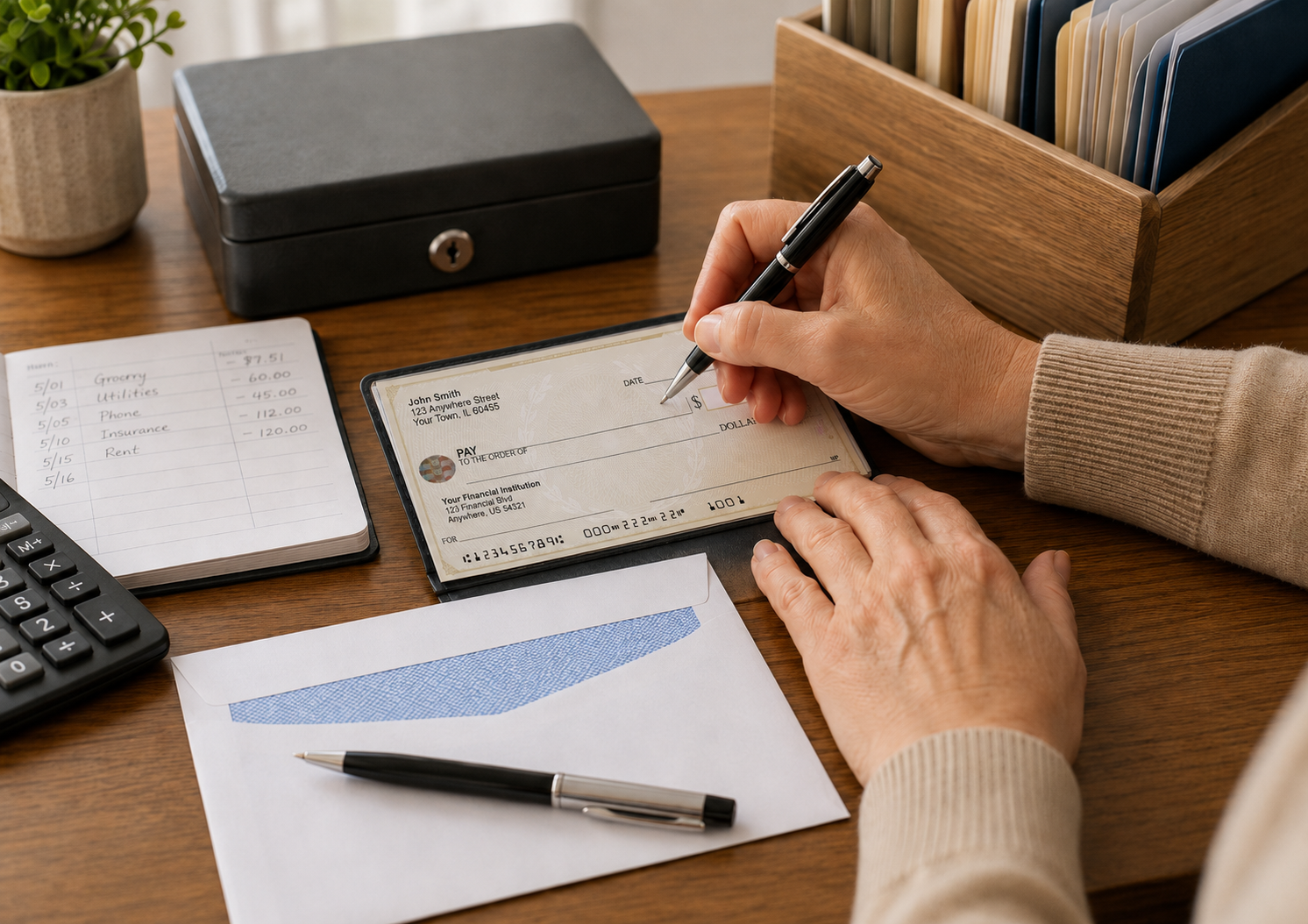 Checks remain a dependable way to pay bills, send gifts, manage household expenses, and make payments when a card or digital payment is not the best option. They also create a clear paper trail that many people appreciate for recordkeeping and budgeting.
Like any payment method, however, checks should be handled carefully. A check contains information that could be misused if it falls into the wrong hands, including your name, bank routing number, account number, and signature. Fortunately, a few simple habits can significantly reduce the risk of check theft, alteration, and fraud.
Whether you write checks every week or only use them occasionally, these practical security tips can help you protect your bank account and feel more confident each time you make a payment.
Store Unused Checks in a Secure Place
Check security begins before you ever write one.
Avoid leaving unused checkbooks in your car, on an open desk, near your mail, or anywhere visitors can easily access them. Store checks in a private drawer, locked filing cabinet, safe, or another secure location within your home.
This is especially important if you keep several boxes of checks on hand. Consider storing only your current checkbook somewhere convenient while placing the remaining boxes in a more secure area.
Business owners should also limit access to company checks. Only employees who are responsible for making payments should be able to access blank checks, account records, or signature stamps.
Treat blank checks the same way you would treat cash, payment cards, or sensitive financial documents.
Fill Out Every Check Completely
Never leave important fields blank when writing a check.
Complete the date, payee name, payment amount, written dollar amount, memo line, and signature before giving or mailing the check to someone. Leaving spaces open can make it easier for someone to alter the payment.
When writing the payee’s name, start as close to the left side of the line as possible. Avoid leaving a large blank space before or after the recipient’s name.
Do the same with the written payment amount. For example, if you are writing a check for $75, write the amount close to the beginning of the line and draw a line through any remaining empty space.
These small steps make it more difficult for another person to add words, numbers, or unauthorized information.
Use Permanent Ink
Write checks using a pen with dark, permanent ink. Avoid pencils, erasable pens, or light-colored ink that can be removed or changed more easily.
Blue or black ink is typically the clearest choice. It is easy to read, easy to scan, and less likely to create confusion when the recipient deposits the check.
Keep a reliable pen with your checkbook so you are not tempted to use whatever happens to be nearby.
Avoid Writing Checks Payable to Cash
A check made payable to “Cash” can generally be deposited or cashed by whoever possesses it. If the check becomes lost or stolen, it may be difficult to prevent someone else from attempting to use it.
Whenever possible, write the name of the specific person, business, organization, or service provider receiving the payment.
If you are unsure how a business wants its name written, review a recent invoice, contact the company, or check its official payment instructions before completing the check.
Confirm Payment Details Before Mailing
Before mailing a check, verify that the recipient’s name, mailing address, account number, and payment amount are correct.
Scammers sometimes impersonate service providers, government agencies, charities, vendors, or other organizations to request fraudulent payments. Be cautious if you receive unexpected payment instructions, especially if the request creates urgency or asks you to send money to a new address.
When something seems unusual, contact the organization through a trusted phone number or official website. Do not rely only on the contact details included in a suspicious letter, email, or text message.
Business owners should also independently confirm unexpected changes to a vendor’s mailing address or payment instructions.
Mail Checks Carefully
Once a check leaves your hands, the way it is mailed matters.
Place the check inside a sealed envelope that does not reveal its contents. Security envelopes can help prevent account information or payment details from being visible through the paper.
Avoid leaving envelopes containing checks in an unlocked residential mailbox for long periods of time. When possible, take outgoing mail to a secure USPS collection location or post office.
If you use a collection box, pay attention to the posted pickup schedule. Mailing the envelope shortly before the next collection can reduce the amount of time it sits unattended.
For especially important or high-value payments, consider using a mailing service that offers tracking or delivery confirmation.
Review Your Bank Account Regularly
Monitoring your account is one of the most effective ways to catch suspicious activity quickly.
Review your bank transactions regularly and confirm that cleared checks match the payments you authorized. Many financial institutions allow customers to view images of deposited checks through online or mobile banking.
Look for:
- Checks made payable to unfamiliar recipients
- Payment amounts that do not match your records
- Duplicate check numbers
- Checks clearing out of sequence
- Unrecognized withdrawals
- Altered payee information
- Payments that clear long after you issued them
Do not assume that every transaction is correct simply because the check number looks familiar. Compare the actual check image with the entry in your check register or budgeting records.
Keep a Check Register
A check register helps you track every payment you make, including checks that have not yet cleared.
Record the check number, date, recipient, payment amount, and purpose immediately after writing each check. This makes it easier to notice missing check numbers, altered amounts, duplicate transactions, or payments you do not recognize.
A register also helps prevent accidental overdrafts. Unlike debit card transactions, checks may not appear in your bank account immediately, so your available balance may look higher than the amount you truly have left to spend.
You can maintain a traditional paper register, use a budgeting spreadsheet, or track payments through a financial management app. The important part is keeping your records accurate and up to date.
Do Not Sign Blank Checks
Never sign a check before the recipient and payment amount have been completed.
A signed blank check could be filled out by anyone who gains access to it. Even when you trust the intended recipient, completing the check first provides an additional layer of protection.
Business owners should be particularly careful with pre-signed checks. If multiple people help manage company expenses, establish a clear approval process rather than leaving signed checks available for future use.
Destroy Voided and Unused Checks Properly
If you make a mistake while writing a check, write “VOID” clearly across the front. Record the check number in your register, then destroy the check before throwing it away.
A cross-cut shredder is ideal for disposing of checks, deposit slips, bank statements, and other documents containing financial information.
You should also securely destroy checks connected to a closed bank account. Even though the account is no longer active, the checks still contain personal and financial details that should not be placed in the trash intact.
Be Careful When Sharing Check Images
A photo of a check can expose more information than you realize.
Avoid posting images of checks on social media, even when celebrating a gift, prize, donation, refund, or business milestone. Covering the payment amount may not be enough. The routing number, account number, check number, name, address, and signature may still be visible.
Use similar caution when sending check images through email or text. Only share financial documents when necessary, and confirm that you are sending them to the correct person.
If you deposit a check through your banking app, follow your bank’s instructions for storing and eventually destroying the original check.
Limit the Personal Information Printed on Your Checks
Personal checks need enough information to identify the account holder, but they do not need to display every detail about your life.
Think carefully before including information such as your phone number, driver’s license number, date of birth, or other sensitive identifiers. In most cases, this information can be provided separately when it is genuinely required.
Many customers choose to print only their name and mailing address on personal checks. Review your bank’s requirements and select the amount of information that makes sense for your needs.
Use Checks With Built-In Security Features
Security features can make checks more difficult to copy, alter, or reproduce.
Depending on the check style and manufacturer, protective features may include chemically sensitive paper, microprinting, security screens, controlled paper stock, or warning indicators. These details can help banks, businesses, and recipients identify potential tampering.
When ordering checks online, purchase them from an established check provider that clearly explains its products and security practices.
Carousel Checks offers a wide selection of personal and business check designs, allowing customers to choose checks that fit their style while maintaining the practical features needed for everyday payments.
Be Alert for Check Overpayment Scams
One common check scam involves someone sending a payment for more than the agreed amount. The sender then asks the recipient to deposit the check and return the difference through a wire transfer, payment app, gift card, or another method.
The original check may initially appear to clear, but it can later be identified as fraudulent. When that happens, the deposited funds may be removed from the account, while the money sent back to the scammer is already gone.
Be cautious if someone:
- Sends more money than expected
- Claims the overpayment was an accident
- Pressures you to return funds quickly
- Requests repayment through a different payment method
- Asks you to send money to another person
- Discourages you from contacting your bank
Do not send money based on an unfamiliar check until you have confirmed the payment is legitimate.
Know What to Do if a Check Is Lost or Stolen
Act quickly if you discover that a check, checkbook, or box of checks is missing.
Contact your bank or credit union and explain what happened. The financial institution may recommend placing a stop payment on an individual check, monitoring the account, closing the account, or opening a new one, depending on the circumstances.
You should also review recent transactions and check images for unauthorized activity.
If a mailed check does not reach its intended recipient, confirm that it has not cleared before issuing a replacement. Your bank can explain the appropriate steps for canceling or stopping the original payment.
Keep records of your conversations, confirmation numbers, reports, and any related correspondence.
Report Suspicious Activity Promptly
Do not wait to contact your bank if you notice a check that you did not write or an amount that appears to have been altered.
Reporting requirements and consumer protections can depend on the type of transaction, financial institution, account agreement, and timing. Contacting the bank promptly gives it the best opportunity to investigate and help protect the account.
You may also need to file a police report, notify the recipient, contact a business’s fraud department, or report identity theft through the appropriate government resources.
Make Check Security Part of Your Routine
Using checks safely does not require a complicated system. It comes down to a few consistent habits:
Store checks securely. Complete every field. Use permanent ink. Mail payments carefully. Track each check. Review your account. Report anything unusual.
These steps take only a few minutes, but they can help protect your money and personal information.
When you are ready to replenish your supply, Carousel Checks makes it easy to order personal and business checks online in a wide variety of designs. Choose a style that feels like you, keep your financial information organized, and use every check with confidence.
Shop Our Most Secure Check Collection with the Most Advanced Security Protection
When security is at the forefront of your mind when shopping for online checks, consider our Hologram Personal Checks. These are our personal checks with the most advanced security features that help protect your personal information and finances.