
When Should You Use a Check Instead of a Card or Digital Payment
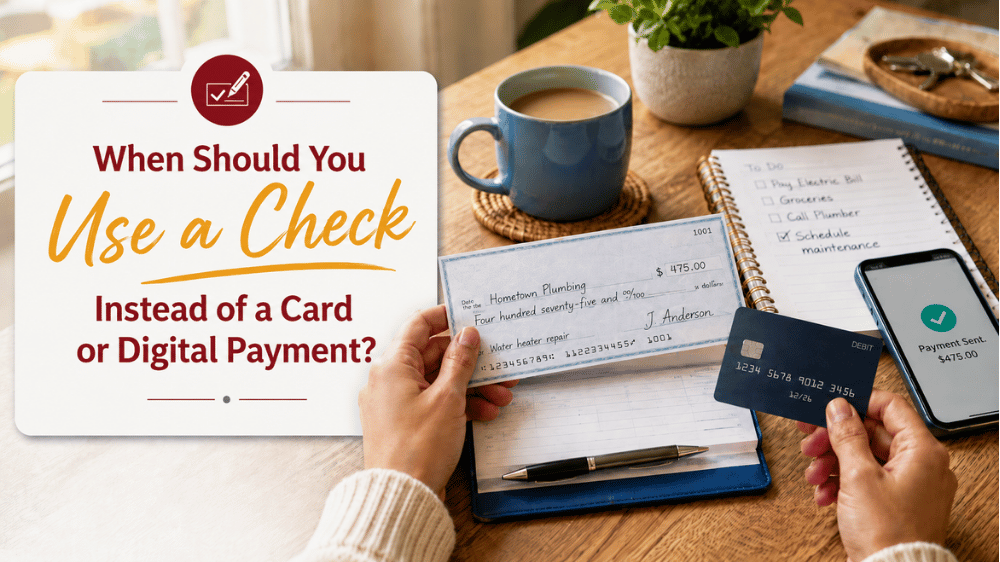 In a world of tap-to-pay cards, mobile wallets, payment apps, and automatic transfers, checks can feel like something people only think about when they suddenly need one. But while digital payments are convenient, there are still plenty of everyday situations where writing a check makes sense.
Personal checks offer a paper trail, a little more flexibility, and a familiar payment option for bills, gifts, services, and situations where a card or app may not be the easiest choice. For many households, keeping a checkbook on hand is less about using checks every day and more about being prepared when the right situation comes up.
If you are wondering whether it is still worth having personal checks, here are some practical times when using a check may be the better option.
Paying Rent, HOA Fees, or Property-Related Expenses
Rent and housing-related payments are still one of the most common reasons people keep personal checks at home. While some landlords and property management companies offer online portals, others may charge processing fees for debit cards, credit cards, or electronic payments.
A check can be a simple way to pay rent, HOA dues, parking fees, storage units, or other recurring property expenses without adding extra transaction costs. It also gives you a clear record of the payment, especially when the check clears through your bank.
For renters, homeowners, and anyone managing household expenses, checks can be a useful backup payment method even if most bills are handled online.
Working With Local Service Providers
Many local service providers still accept or prefer checks, especially for larger jobs or appointments. This might include landscapers, house cleaners, pet sitters, repair technicians, contractors, tutors, music teachers, or childcare providers.
For smaller businesses, checks can be helpful because they may avoid some of the fees that come with card payments or third-party apps. For the customer, writing a check can feel more professional and organized than handing over cash, especially for services that happen regularly.
Checks can also be useful when paying for one-time projects around the home, such as plumbing repairs, appliance service, painting, landscaping, or furniture delivery.
Sending Gifts for Weddings, Graduations, and Special Occasions
Cash can be easy to misplace, and digital payments can feel a little impersonal for milestone events. A check can be a thoughtful middle ground.
For weddings, graduations, birthdays, baby showers, religious celebrations, or holidays, a check allows you to give money in a way that feels intentional. You can place it inside a card, write a personal message, and give the recipient the flexibility to deposit it when they are ready.
This is especially helpful for larger gifts, where mailing or carrying cash may not feel secure.
Making Payments When You Want a Clear Paper Trail
One of the biggest benefits of using personal checks is that they create a record. When a check clears, your bank typically shows the payment details, amount, date, and recipient. That can be helpful when you need to track expenses, confirm a payment, or keep better household records.
Checks may be especially useful for:
- Home repairs
- Medical bills
- School-related expenses
- Charitable donations
- Rent or property payments
- Childcare or tutoring
- Reimbursements to family members
- Large personal purchases
For anyone who likes to keep financial records organized, checks can make certain payments easier to document.
Avoiding Card Processing Fees
Some businesses and organizations charge extra fees for card payments. This is especially common with rent portals, tuition payments, government services, utilities, and certain professional services.
In those situations, paying by check may help you avoid convenience fees or processing charges. The savings may seem small for one payment, but they can add up over time, especially for recurring expenses.
Before making a larger payment, it is worth checking whether there is a fee for using a card and whether a check is accepted instead.
Paying People Who Do Not Use Payment Apps
Payment apps are popular, but not everyone uses them. Some people prefer not to connect their bank account to an app, while others simply feel more comfortable with traditional payment methods.
Checks can be useful when paying older relatives, neighbors, babysitters, small business owners, local clubs, community groups, or anyone who prefers a physical payment. They are also helpful when you do not want to ask someone to download a new app just to receive money.
A check keeps things simple, familiar, and easy to understand.
Making Charitable Donations
Many people still use checks for charitable giving, church donations, community fundraisers, school fundraisers, nonprofit events, and memorial gifts.
Checks can make donations easier to track for personal records, especially if you want documentation for tax purposes. They also allow you to include a note on the memo line, such as the name of a fundraiser, event, person, or specific donation purpose.
For recurring giving or one-time donations, checks remain a practical option for many households.
Keeping a Backup Payment Method at Home
Even if you rarely write checks, having a checkbook available can be useful when unexpected situations come up. Online systems can go down. A vendor may not accept cards. A local service provider may prefer check payments. A family member may need a quick reimbursement.
Checks are not necessarily something you need to use every day, but they can be a helpful backup when other payment options are not ideal.
Keeping personal checks at home gives you one more way to manage payments without scrambling for a solution.
When Not to Use a Check
Checks are useful, but they are not the best option for every situation. For quick everyday purchases, online shopping, subscriptions, and payments where speed matters, cards or digital payments may be more convenient.
You should also be thoughtful about where you send checks. Because checks include personal and banking information, it is important to mail them carefully, store them securely, and only write checks to people or organizations you trust.
A check is best used when it offers a clear advantage, such as better recordkeeping, fewer fees, payment flexibility, or convenience for the recipient.
Why It Still Makes Sense to Keep Personal Checks
Personal checks are no longer the default payment method for every purchase, and that is okay. Their value today is more specific. They help with payments that need a paper trail, situations where digital payments are not accepted, gifts that feel more personal, and expenses where card fees are not worth it.
For many consumers, the smartest approach is not choosing between checks and digital payments. It is having both available and using the right payment method for the right situation.
If you need to restock your checkbook, Carousel Checks makes it easy to order personal checks online in a variety of styles, from classic designs to personalized options that feel more like you. Having checks ready when you need them can make everyday money management a little easier, more organized, and more flexible.